
|
The "Decoupled" Institution and the "Embedded" Practice: Research on Institutional Decoupling and Educational Inequality
Time:2026-05-13 Counts:33
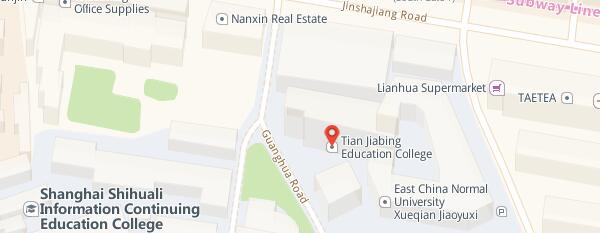
Interdisciplinary Salon of Educational PsychologyLecture ThemeThe "Suspended" Institution and the "Embedded" Practice: Research on Institutional Decoupling and Educational Inequality Time14:00–15:30, Wednesday, May 20, 2026 VenueRoom 801, Tian Jiabing College of Education Speaker
Jiang ShanDr. Jiang Shan is currently a New Hundred Talents Research Fellow and doctoral supervisor in the Department of Sociology, Zhejiang University. He earned his PhD in Social Welfare from the Chinese University of Hong Kong and was a visiting scholar at the University of Cambridge. His research interests cover child and family well-being, social work and social welfare, as well as mental health and behavioral problems. His works have been published in journals including Trauma, Violence, & Abuse, Social Science & Medicine, and Child Abuse & Neglect. He has presided over multiple research projects funded by the National Natural Science Foundation of China and the Humanities and Social Sciences Foundation of the Ministry of Education. He serves as Director of the Social Welfare Committee of the Chinese Sociological Association, Director of the Zhejiang Sociological Association, and Associate Editor of Child & Family Social Work and Journal of Community Psychology. He has been awarded the titles of Zhejiang Zhijiang Young Social Scientist and Zhongying Young Scholar, and was listed in the Stanford University Top 2% Scientists Worldwide (Social Work Discipline, 2023–2025). Moderator
Ma ShufengAssociate Professor, Department of Educational Psychology, Faculty of Education. She holds a PhD in Educational Psychology from the University of Illinois Urbana-Champaign. Her main research interests lie in the design of interactive and collaborative learning environments as well as the evaluation of their intervention effects. Lecture AbstractAgainst the backdrop of growing global emphasis on social and emotional competency development in educational governance, schools are generally under normative pressure to embed relevant philosophies into formal institutional arrangements. Nevertheless, large-scale empirical evidence remains scarce regarding whether decoupling exists between schools’ symbolic institutional arrangements and substantive instructional practices, as well as its implications for educational equity. Drawing on cross-national data from the OECD Study on Social and Emotional Skills (SSES 2023), this study examines the distinct influences of school-level symbolic institutional adoption and teacher-level substantive classroom practices on students’ social and emotional competencies. The findings are as follows. First, prominent institutional decoupling exists within schools: teachers’ classroom practices significantly promote students’ social and emotional competencies, whereas formal institutional arrangements at the school level show no meaningful effects. Second, classroom practices yield a notable equalizing effect, such that students from disadvantaged social backgrounds gain more substantially from substantive instructional engagement, thereby narrowing social-class disparities in social and emotional competencies. Third, the primary consequence of institutional decoupling lies in the efficiency loss of policy goals rather than the widening of social inequality. These results suggest that the focus of educational governance should shift from symbolic institutional construction toward grounded classroom practice. Key Wordsinstitutional decoupling, social and emotional education, classroom practice, cross-national comparison The Interdisciplinary Salon of Educational Psychology is a regular academic event initiated by the Department of Educational Psychology, East China Normal University. It invites distinguished domestic and international scholars in education and psychology to share latest research achievements and is held on a monthly basis. The salon aims to broaden the academic vision of researchers in educational psychology, advance the development of educational empirical research, and foster interdisciplinary academic collaboration. |


| Contact us | |
|
Department Of Educational Psychology Address : No. 3663, Zhongshan North Road, Shanghai Zip code : 200062 Tel : 86-21-6223078 E-mail : depecnu@163.com |
|
| Copyright 2018 East China Normal University Department Of Educational Psychology . All Rights Reserved | Technical support: Shanghai echao |