
|
Brown Bag Seminar | Pre-conference Presentation Coaching for Graduate Students
Time:2026-05-09 Counts:31
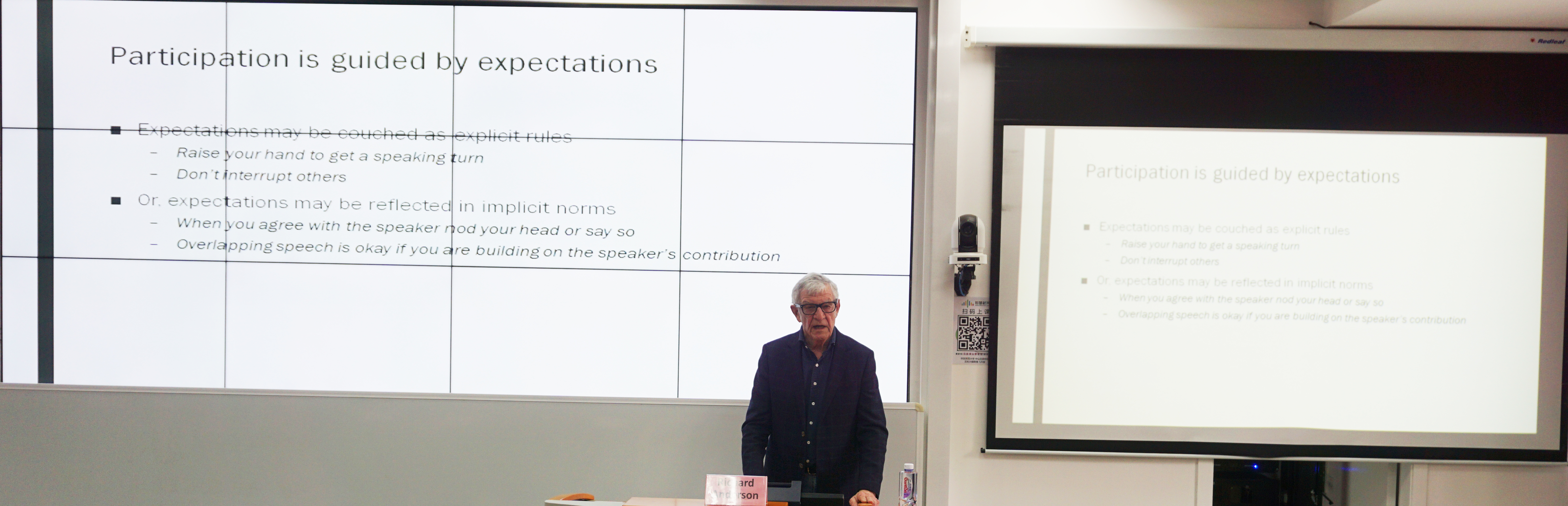
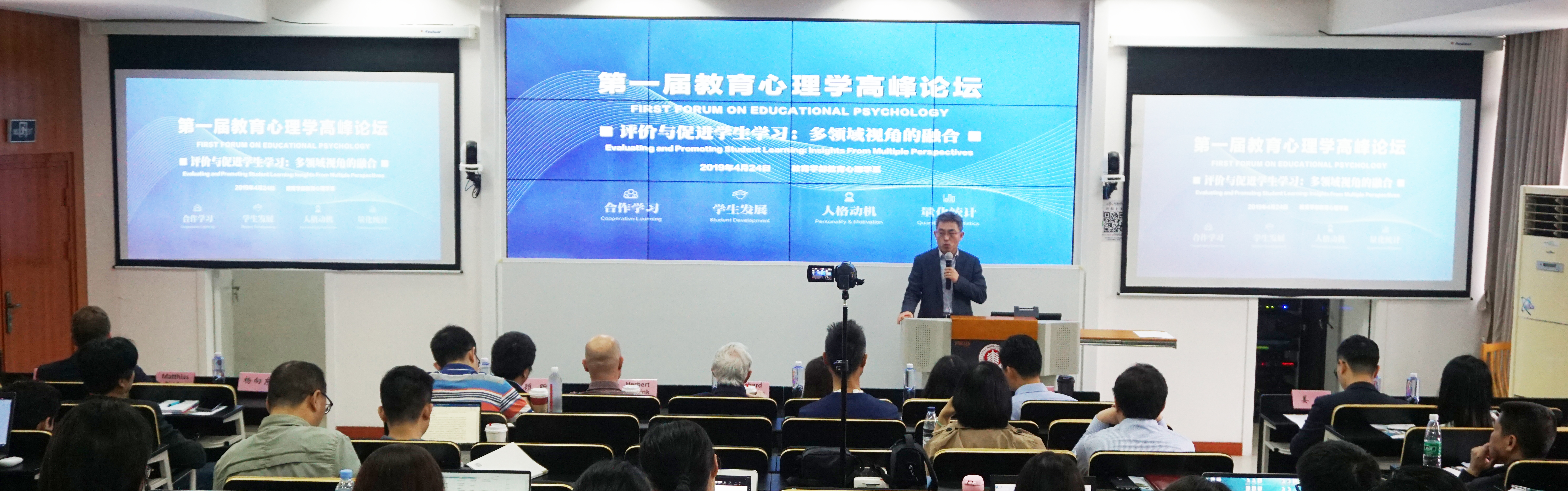
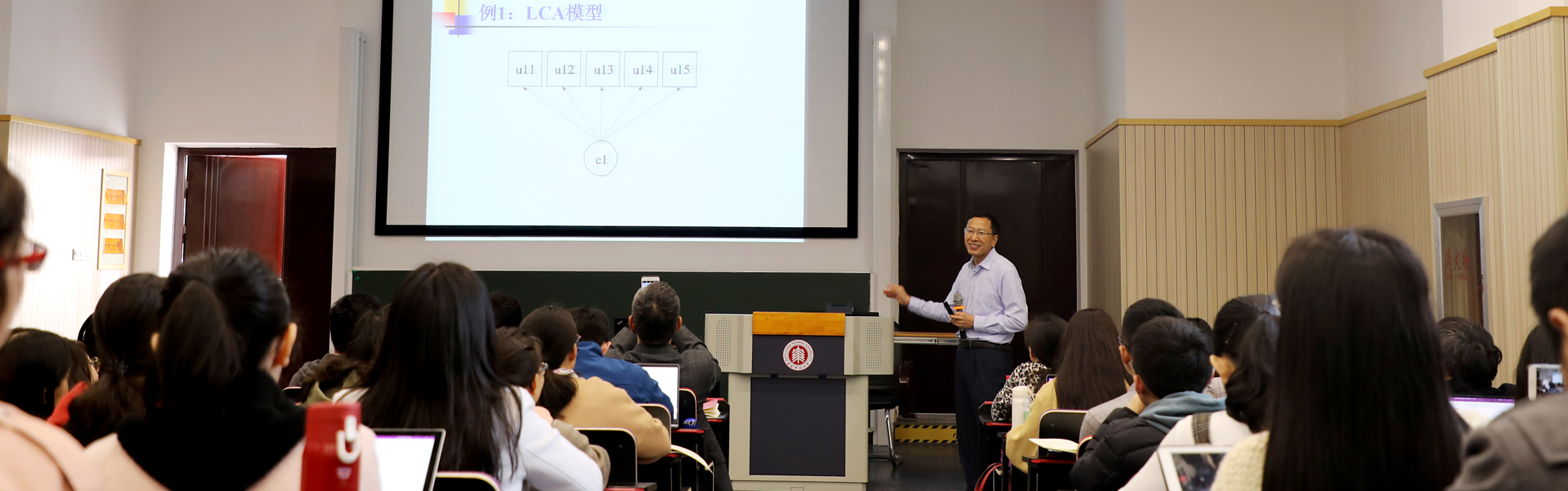
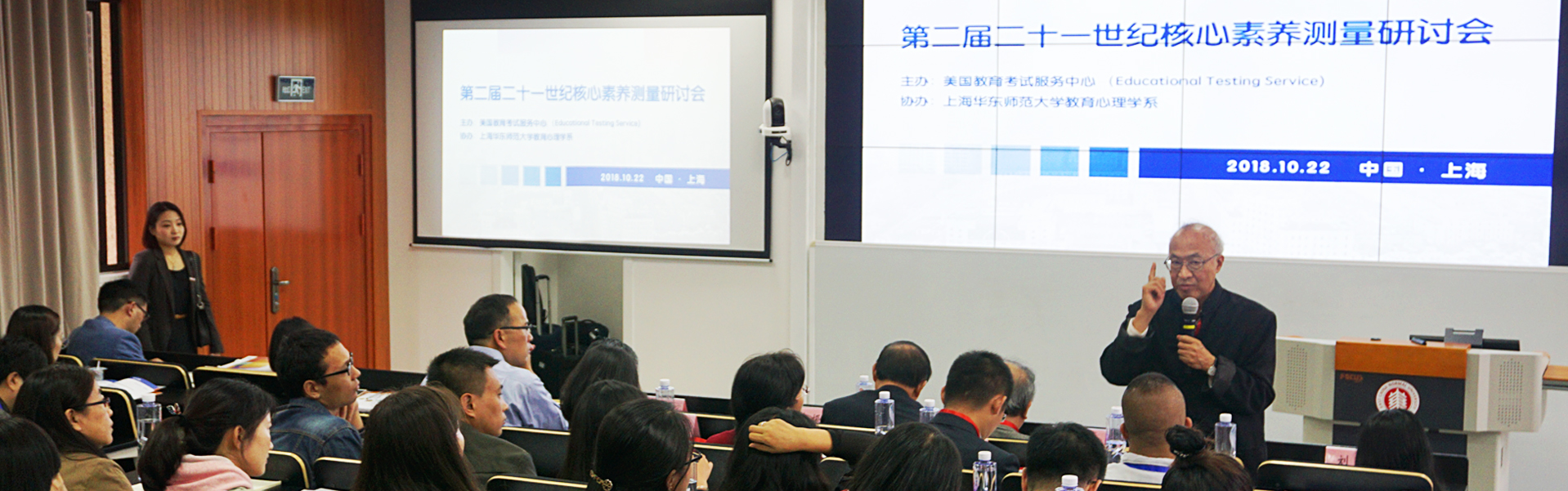
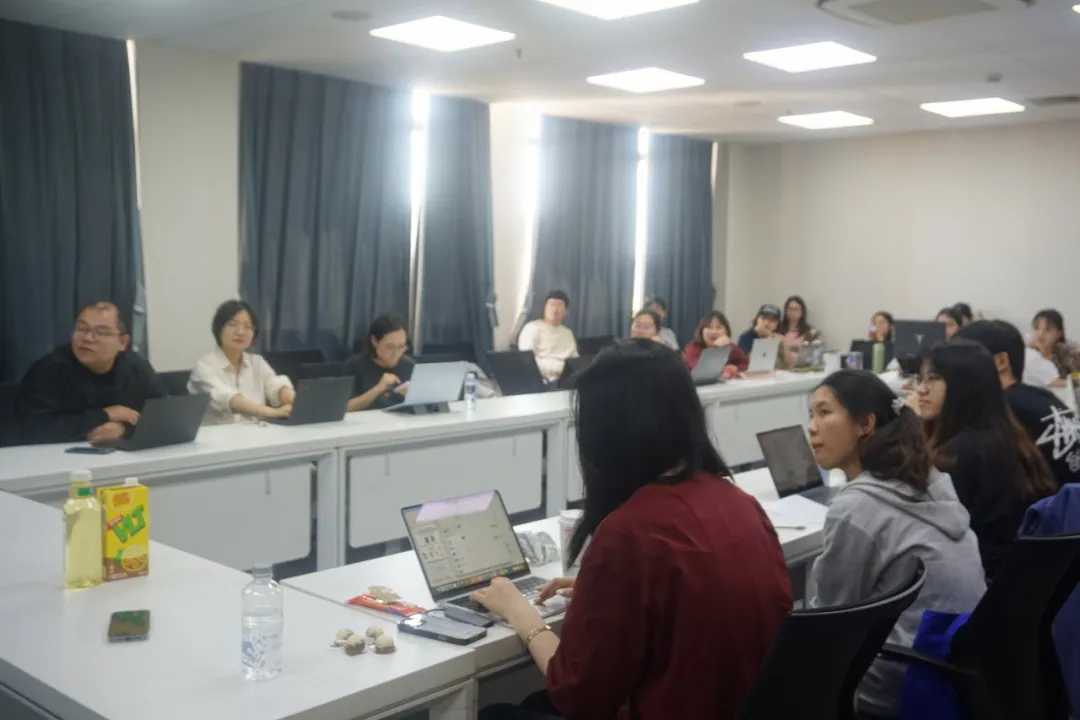
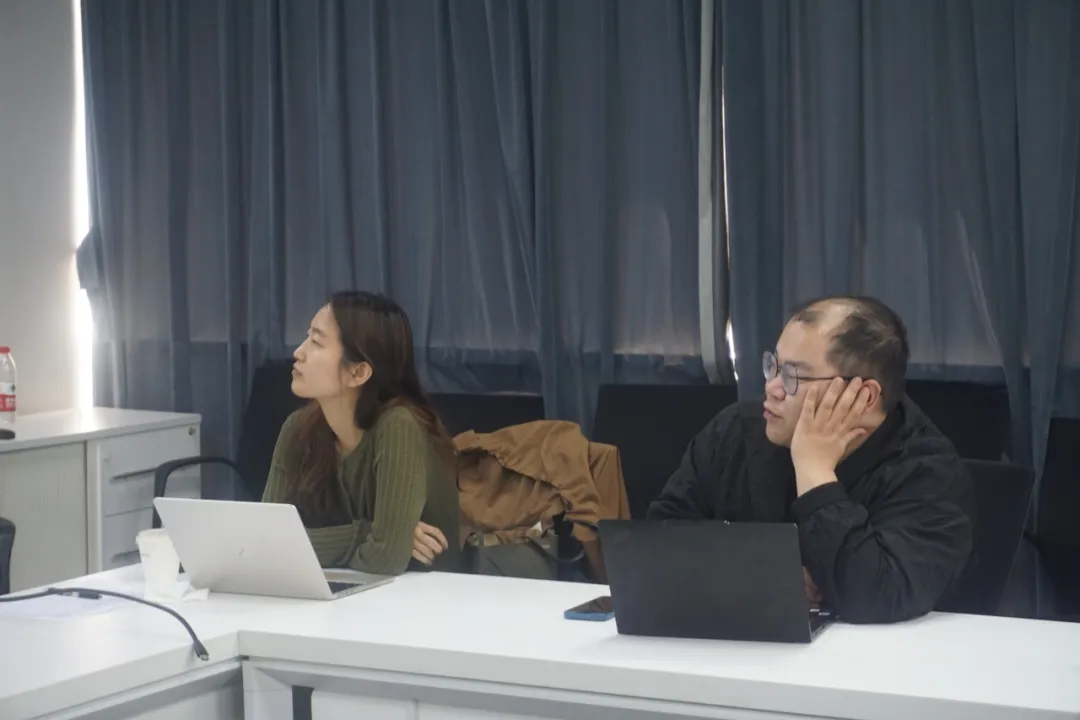
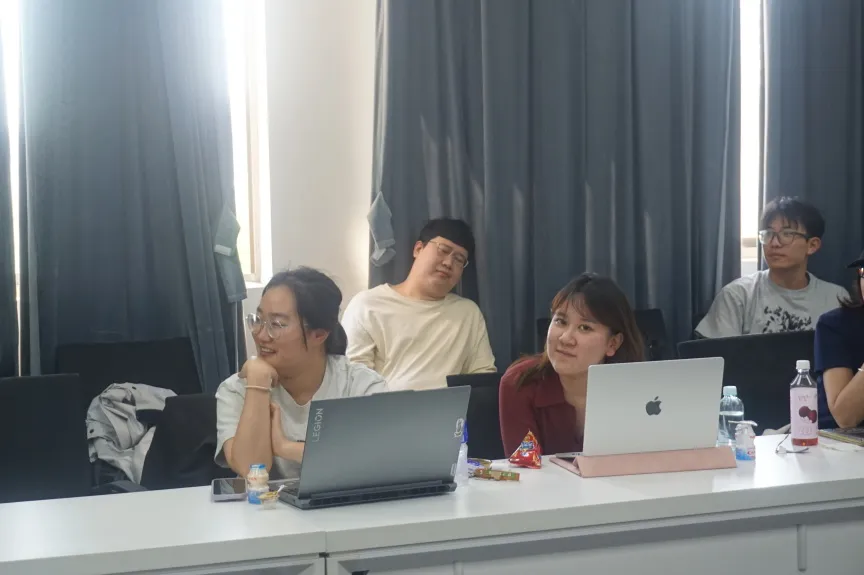
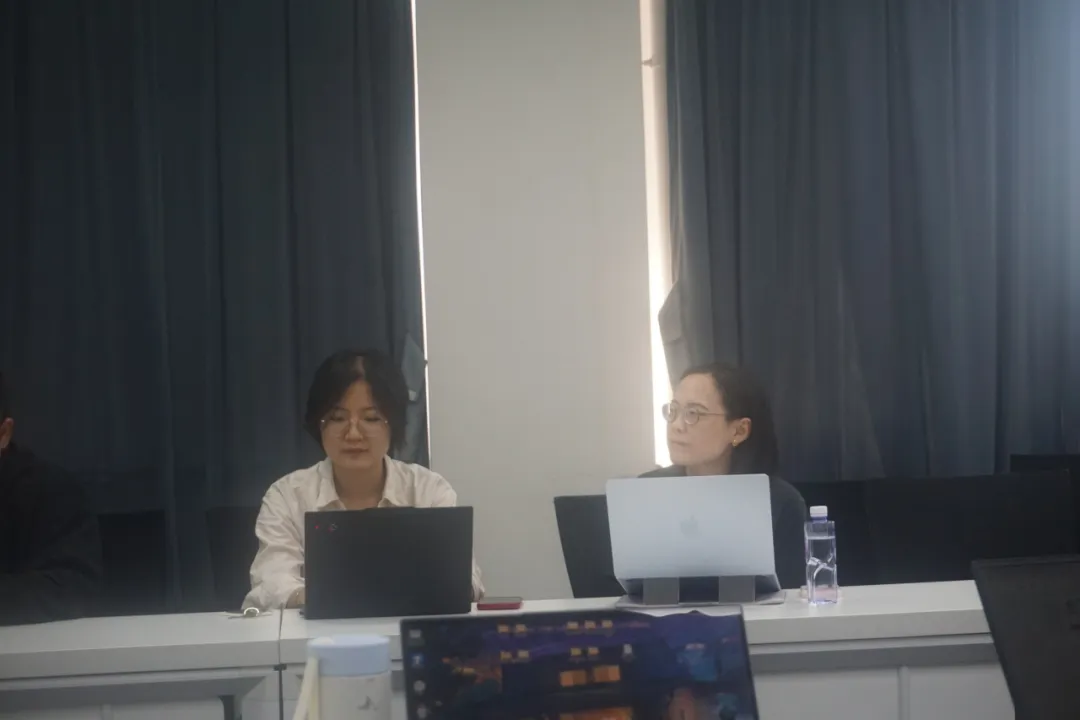
Brown Bag Seminar The term Brown Bag derives from the English "brown bag" (referring to the brown paper bag used for packed lunches), also known as a lunch seminar. It is an informal academic activity where researchers discuss ongoing research projects and progress while having lunch together. On the afternoon of May 6, 2026, the Department of Educational Psychology held a distinctive Brown Bag academic session. A number of students who are to participate in the 2026 Biennial Meeting of the International Society for the Study of Behavioral Development (ISSBD 2026) gave pre-conference practice presentations. The event featured lively discussions and in-depth Q&A sessions, creating a genuine yet relaxed atmosphere for academic exchange. A total of seven students took part in the rehearsal: Yan Han, Wu Yongyin, Zhu Ziye, Zhang Wenzhuo, Yang Kaiyue, Cai Haoyu, and Guo Baoqi. The session included six poster presentations and one oral presentation. All students delivered their research in English, while faculty and peers raised questions and engaged in discussions in English, simulating the real setting of international academic conferences.
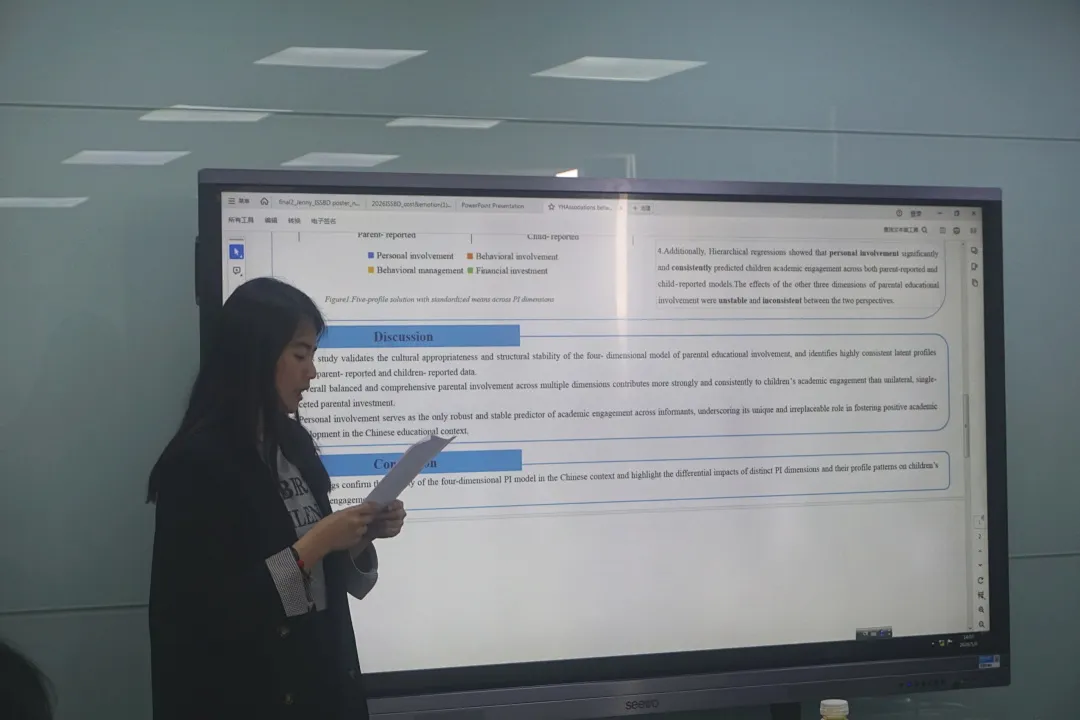
Poster Presentations Research on Parental Educational Involvement and Children’s Academic Engagement — Yan Han Focusing on the context of Chinese families, this study addresses the cultural limitations of traditional Western frameworks of parental involvement and resolves reliability issues arising from single-source child-reported data. It proposes a four-dimensional structure of parental involvement. With a sample of over 1,000 parent–child dyads in Shandong Province, data were collected via parallel parent and child scales. The results validated the good fit of the four-dimensional model and identified five profiles of parental involvement from dual parent–child perspectives. Children in the overall high-involvement group showed the highest academic engagement. Personal emotional engagement served as a stable predictor of children’s academic achievement, and balanced, comprehensive parental involvement proved more effective than one-dimensional involvement alone.
Faculty and students discussed the theoretical origin of the four-dimensional structure, EFA/CFA analytical results, and the applicability of the model across cultural contexts.
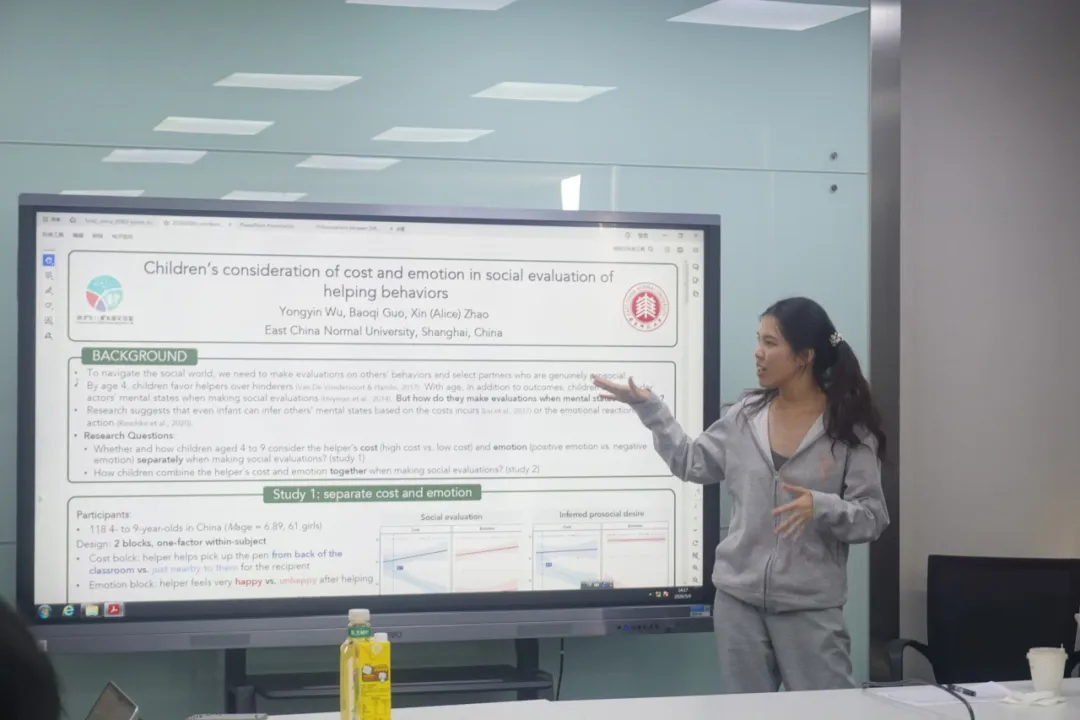
How Children Evaluate Helpers Based on Cost and Emotion — Wu Yongyin This study explores how children aged 4–9 integrate helper cost and emotional cues in social evaluation. Study 1 set conditions of high/low helping cost and positive/negative helper emotion. The results showed that children as young as 4 years old attach importance to helpers’ emotion, while increasing age leads to greater attention to helping cost. Adopting a 2×2 design, Study 2 found that under conflicting cue conditions, younger children rely more on emotional cues for evaluation, whereas older children can balance both cost and emotion. When inferring prosocial intentions, children consistently prioritize emotional information. In addition, notable differences were found between adults’ and children’s evaluation logic.
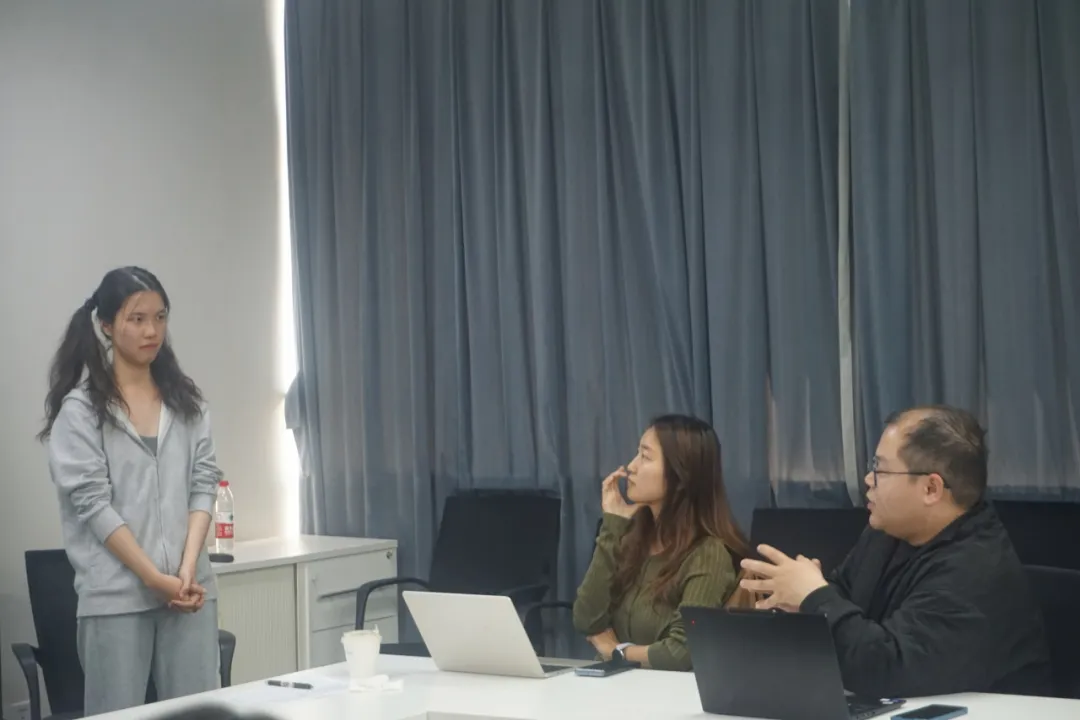
On-site discussions focused on why 4-year-olds are sensitive to emotion but insensitive to cost, the influence of emotional gradient adjustment on research outcomes, and the rationality of the broad 4–9 age range selected in the study.
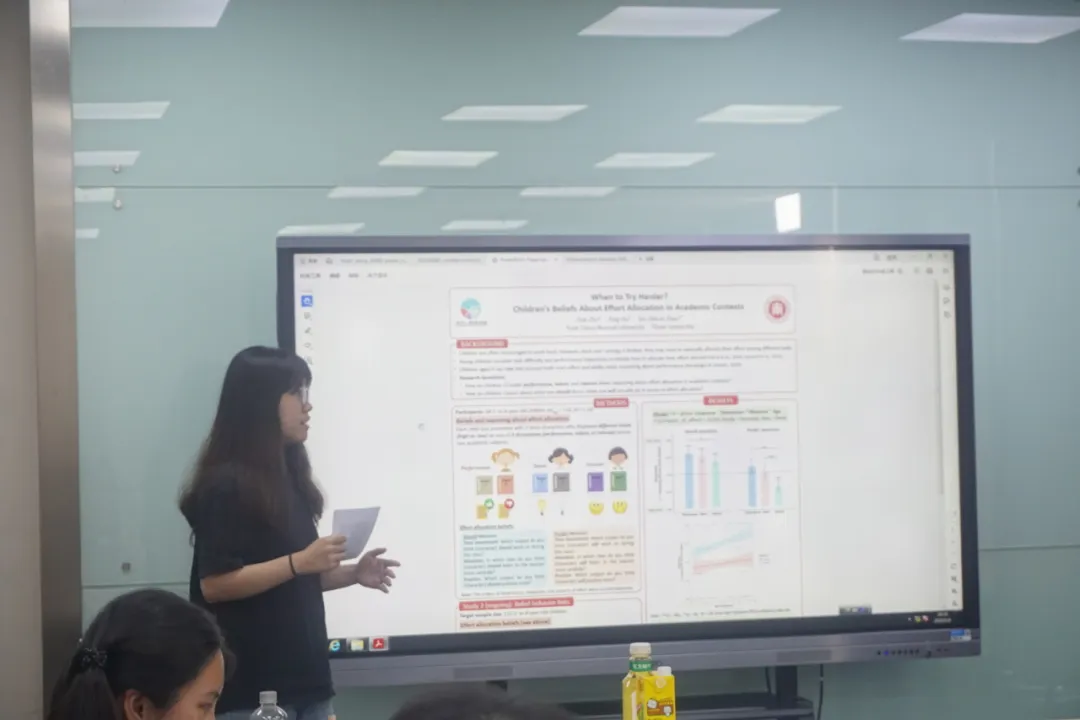
Children’s Beliefs About Effort Allocation in Academic Settings — Zhu Ziye With a sample of 64 Chinese children aged 5–8, this study investigates how children allocate effort according to academic performance, innate ability, and personal interest. The findings revealed that children distinguish between what one should do and what one will do. Normatively, children believed more effort should be devoted to weaker subjects, and this tendency strengthens with age. In practical prediction, children expected others to invest more effort in subjects of high personal interest. Study 2 plans to expand the sample size and explore the association between effort allocation beliefs and children’s challenge-seeking and persistence behaviors.
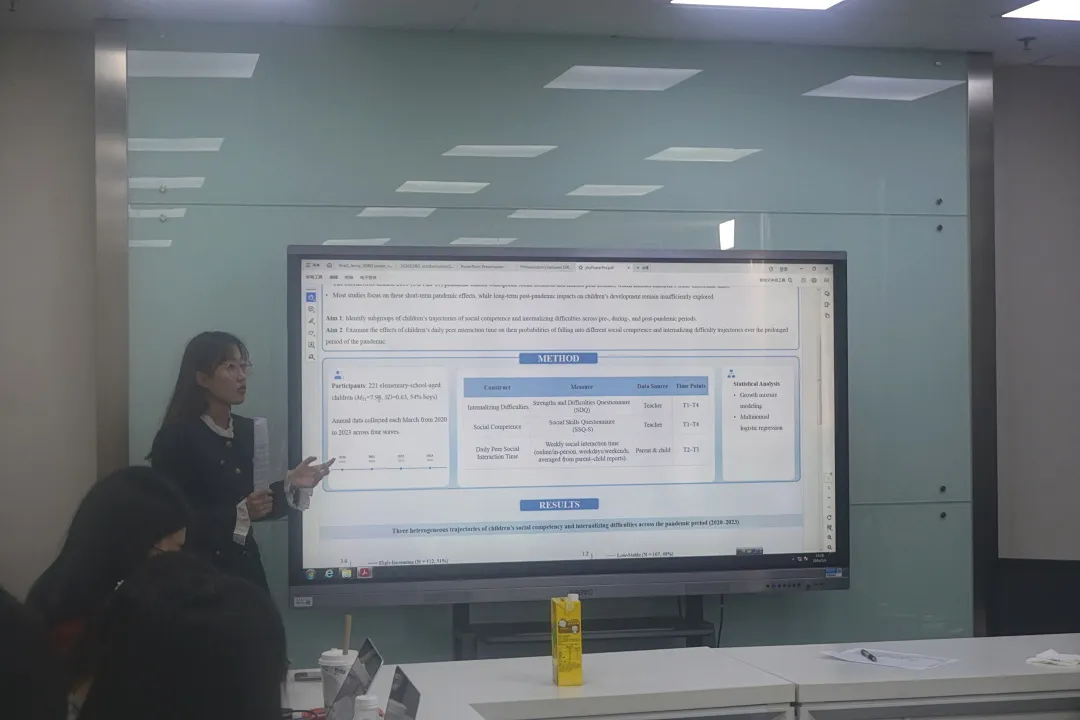
Faculty questioned the core connection between the two studies, the theoretical basis of research hypotheses, and the equivalence of the three dimensions: academic performance, talent, and interest. Some students pointed out the alignment between challenge-seeking/persistence tasks and core research variables, suggesting the addition of behavioral indicators directly related to academic ability and interest. The presenter noted that psychological mechanisms such as self-control and social expectation will be incorporated into subsequent analyses to refine the research framework. Developmental Trajectories of Children’s Social Competence and Internalizing Problems During the COVID-19 Pandemic — Yang Kaiyue Based on four-wave longitudinal data collected from 221 Chinese primary school students between 2020 and 2023, this study explored developmental trajectories of children’s social competence and internalizing problems, as well as the predictive role of peer interaction duration. Three trajectory types were identified for social competence: high growth, low growth, and sharp decline; three trajectory types emerged for internalizing problems: low stable, high growth, and low growth. Children with less than one hour of daily peer interaction during the pandemic showed a significantly higher risk of declining social competence and worsening internalizing problems. The findings provide empirical evidence for protecting child development under public health crises. Faculty suggested supplementing specific background information on pandemic prevention policies and school teaching arrangements across the four measurement time points, as well as detailed descriptions of participants’ grade levels and regional distribution. Discussions also addressed discrepancies between the trajectory results and previous literature. The presenter emphasized that reduced peer interaction during the pandemic was the key reason for the later decline in social competence among initially high-competence children.
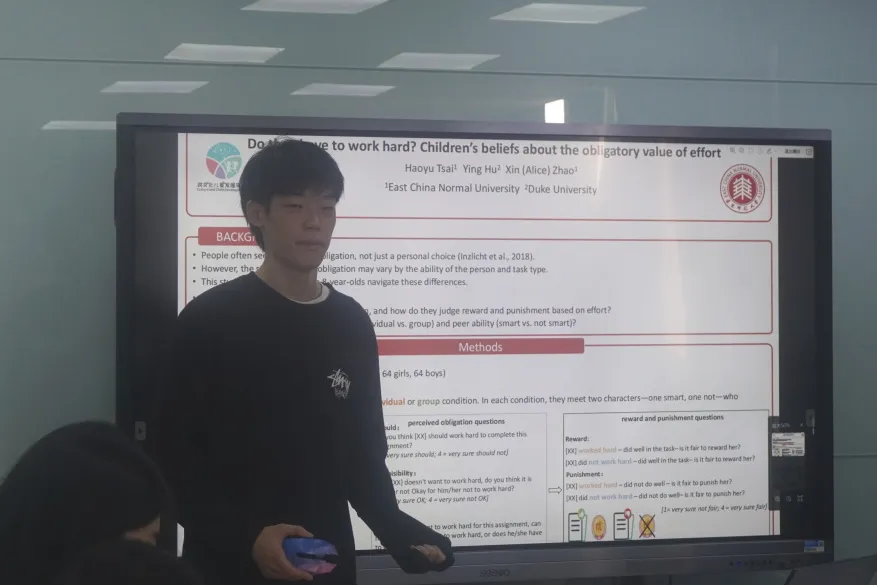
Children’s Perceptions of Obligation to Effort and Fairness Judgments of Reward and Punishment — Cai Haoyu With 128 children aged 5 to 8 as participants, this study set individual/group tasks and high/low ability roles to explore children’s understanding of the obligation to make effort and their fairness judgments of reward and punishment based on effort levels. The results showed that children across all age groups believed that individuals ought to exert effort and that lack of effort was unacceptable. With age, children became more supportive of individual autonomy of choice. Children also took task type and effort level into account when making reward and punishment judgments. Faculty and students discussed inconsistencies between the findings and previous studies, research design issues, and future research directions.
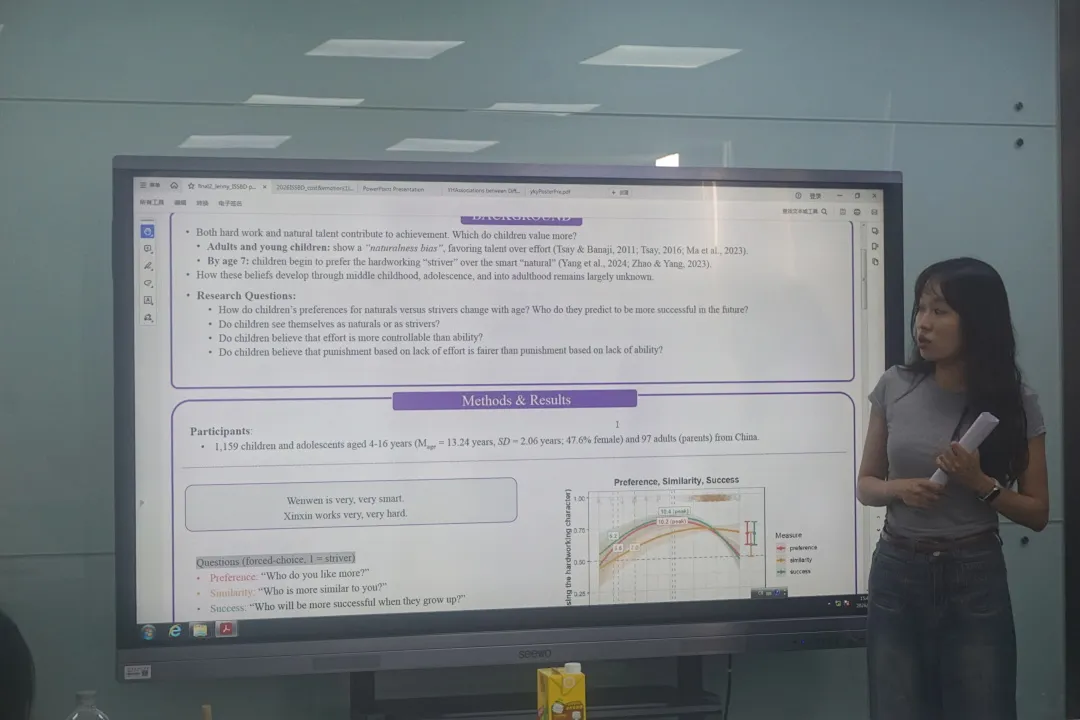
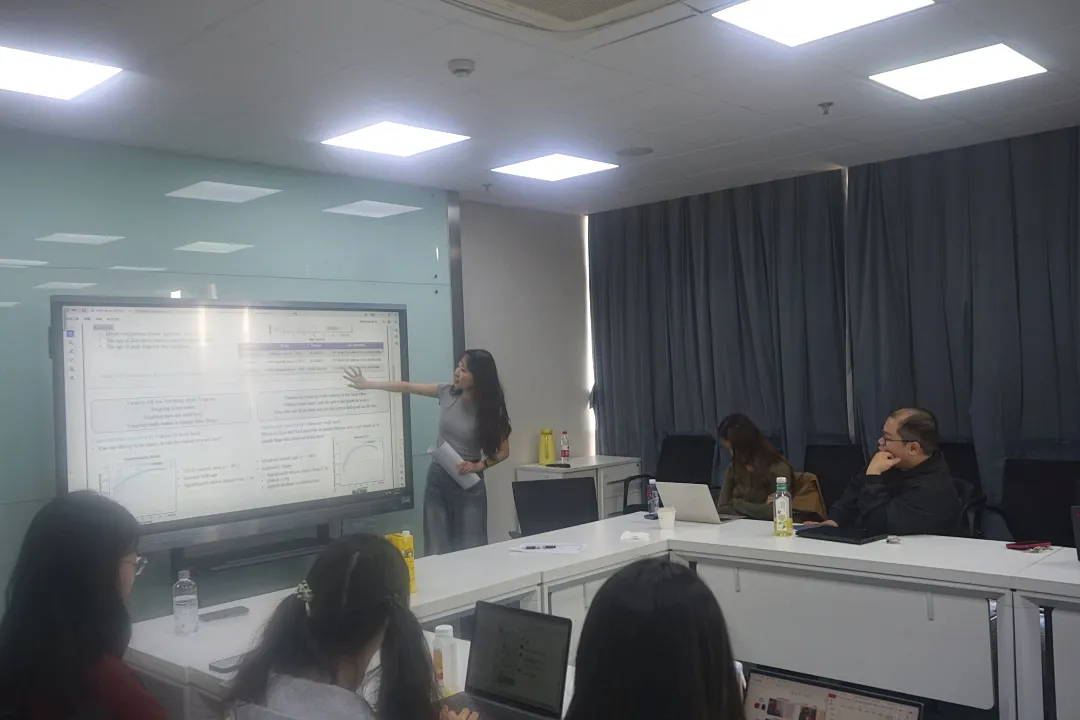
Based on a sample of over 1,100 children and adolescents aged 4 to 16, this study examined developmental changes in preferences for innately gifted individuals versus hardworking individuals. The results revealed that children’s preference for hardworking people and their belief that hard work leads to greater success followed an inverted U-shaped trend: the preference was significantly above chance level around age 5, peaked at age 10, and declined in adolescence. By contrast, the tendency to self-identify as a hardworking person kept rising with age. Children from an early age regarded effort as controllable and innate talent as uncontrollable. Their judgment that “those who do not make effort deserve punishment” peaked at 11.6 years old and then slightly decreased.
Teachers and students discussed the psychological mechanism underlying the inverted U-shaped preference. They attributed the pattern mainly to increased academic difficulty in upper primary grades and the socialization of idealistic values. Regarding the limitation that a cross-sectional design cannot separate age effects from cohort effects, teachers suggested phrasing conclusions cautiously and acknowledging potential historical trend influences. It was also recommended to refine sample information on region and grade to reflect cultural diversity within the Chinese context.
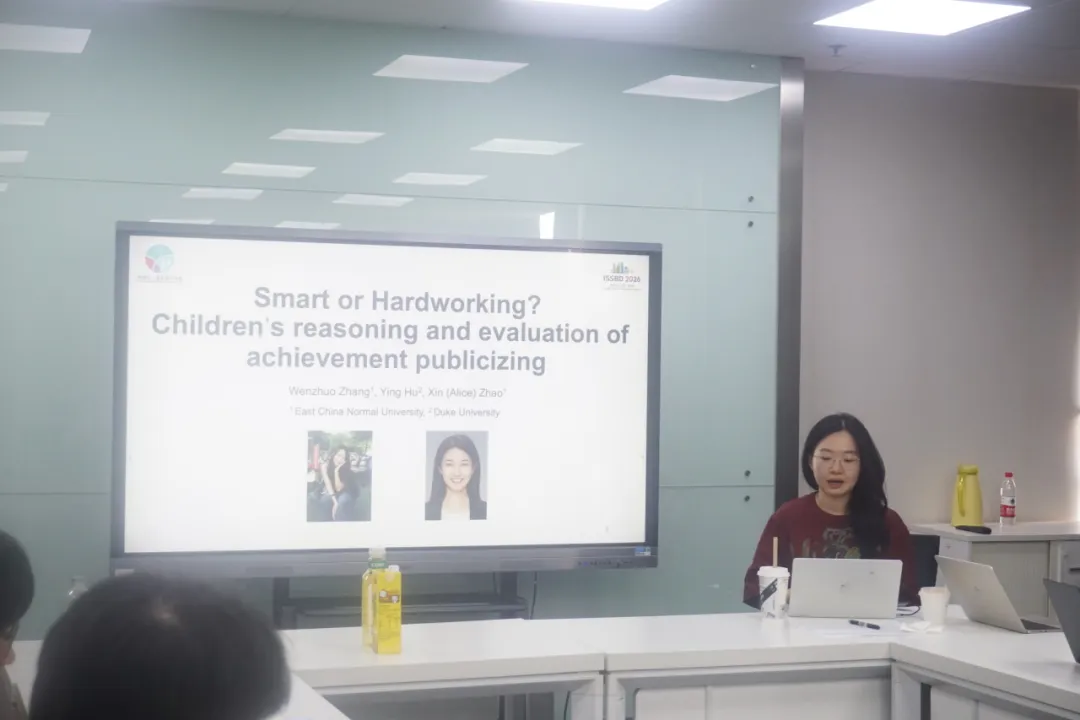
Smart or Diligent? How Children Publicly Present Their Achievements — Zhang Wenzhuo This study focuses on children’s achievement attribution and reputation management, addressing the limitation of existing research that fails to integrate actual achievement pathways with public self-presentation behaviors. Recruiting Chinese children aged 7–11 and adults, the research explored children’s reasoning and evaluation of others’ achievement display as well as their own presentation choices in success and failure situations.
In Study 1, by manipulating actual achievement sources and public presentation styles, the findings indicated that children can clearly distinguish consistent from inconsistent self-presentation behaviors and make differentiated inferences about underlying motives. Their evaluations of others consider both the real origin of achievements and the way achievements are publicly displayed. Study 2 examined children’s choices of achievement presentation toward different audiences (teachers and peers) under success and failure scenarios, such as highlighting innate talent versus personal effort. The results showed that with increasing age, children were less likely to highlight talent and more inclined to emphasize effort when succeeding. When failing, they tended to downplay lack of ability and instead attribute failure to insufficient effort. Overall, children evaluate others by combining actual performance with public behaviors. Under socialization influences, they gradually develop a tendency to value hard work and avoid showing off innate talent. Their presentation of achievements reflects both genuine attribution and impression management.
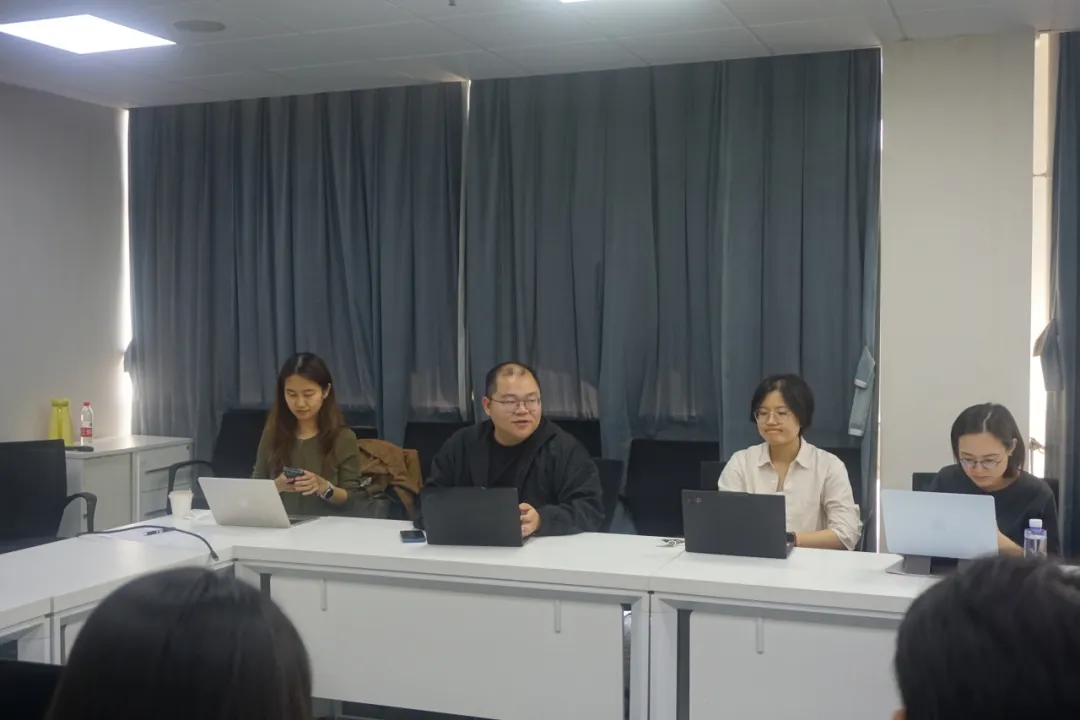
During on-site discussions, teachers and students distinguished the different psychological processes behind achievement presentation and genuine attribution, and exchanged suggestions for improvement concerning cultural norms, growth mindset and other influencing factors. This Brown Bag Seminar fully simulated the formal procedure of the ISSBD international conference. Featuring one oral presentation and six poster presentations, it covered core developmental psychology topics including family parenting, social cognition, child development during the pandemic, achievement beliefs, and fairness of effort. Every presenter received practical training in full-English delivery, academic Q&A, and research logic refinement. Faculty–student interactions targeted key issues related to research methods, theories, cultural contexts, and cross-age comparisons. This targeted pre-conference rehearsal not only polished presentation contents but also strengthened students’ competence in international academic communication. It fully demonstrated their solid research foundation and good academic demeanor, laying solid preparation for their upcoming participation in the international conference. |
| Contact us | |
|
Department Of Educational Psychology Address : No. 3663, Zhongshan North Road, Shanghai Zip code : 200062 Tel : 86-21-6223078 E-mail : depecnu@163.com |

|
| Copyright 2018 East China Normal University Department Of Educational Psychology . All Rights Reserved | Technical support: Shanghai echao |