
|
Event Recap | Interdisciplinary Salon: Social Network Data Analysis in Education and Psychology
Time:2025-06-04 Counts:34
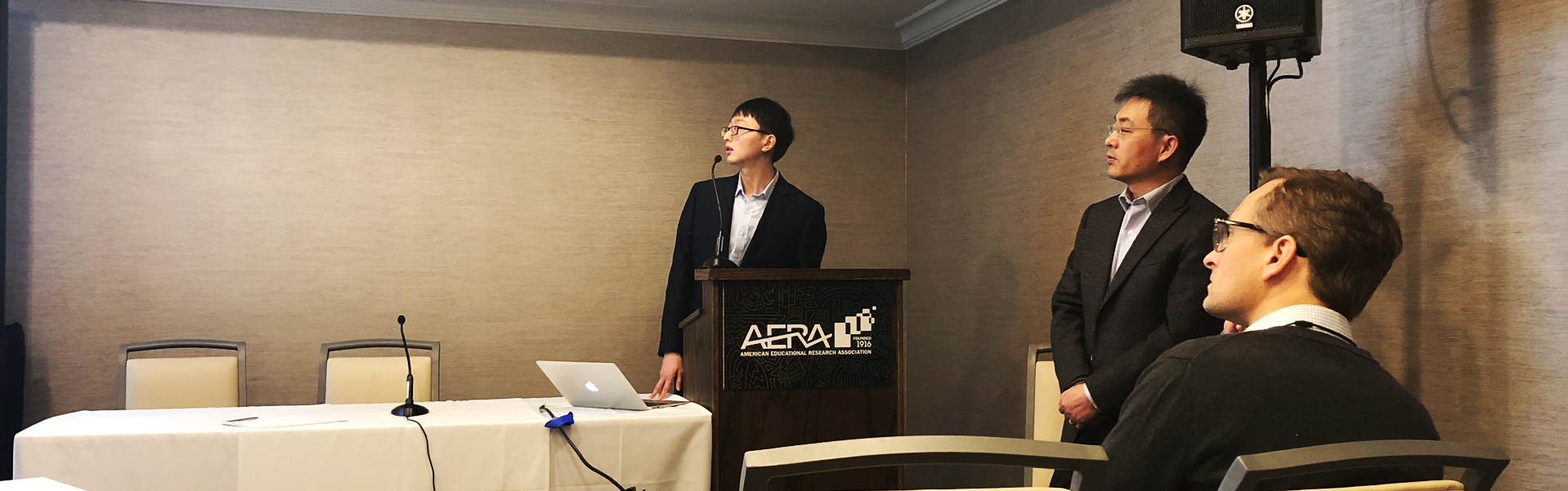
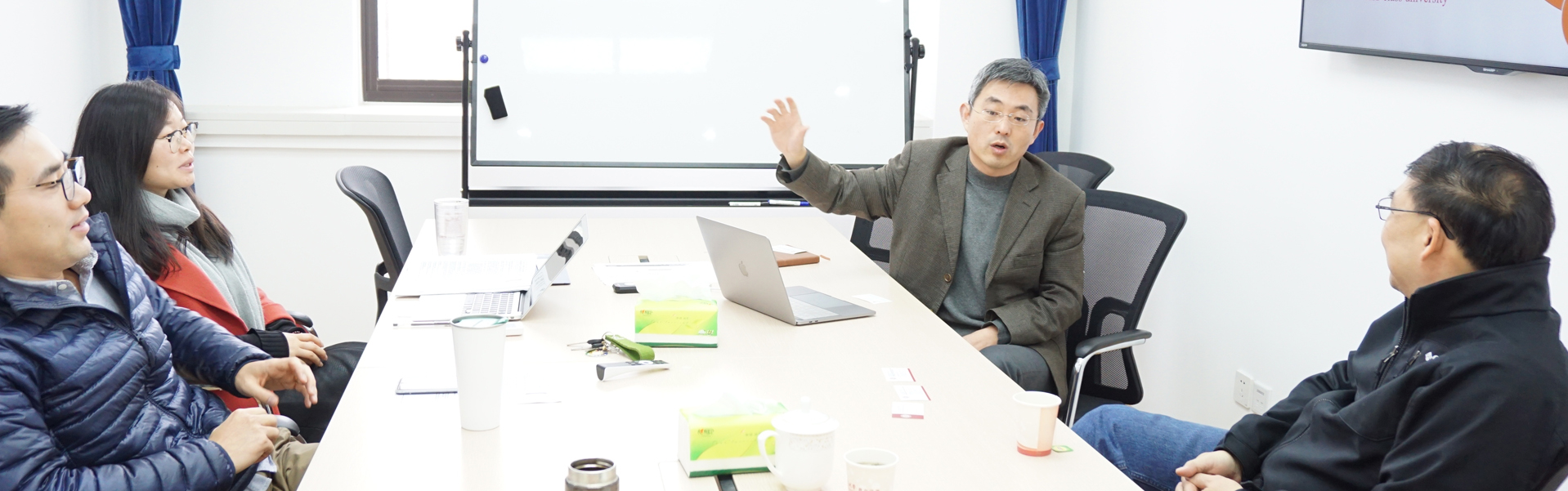
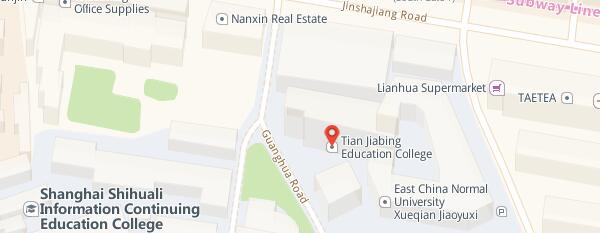
On the morning of May 26, 2025, the Department of Educational Psychology at East China Normal University (ECNU) successfully held an interdisciplinary salon themed "Social Network Data Analysis in Education and Psychology" at Room 801, Tian Jiabing College of Education. The lecture was hosted by Dr. Gu Xin, and featured Professor Zhang Zhiyong from the Department of Psychology, University of Notre Dame (USA) as the keynote speaker. Professor Zhang earned his Ph.D. in Developmental Psychology from the University of Virginia. His research focuses on practical data analysis, the development of new methodologies, and software tools in psychology, education, and health research. His recent work primarily centers on social network analysis and text data mining.
The Importance of Social Network Analysis At the beginning of the lecture, Professor Zhang briefly introduced the significance of social network analysis in educational and psychological research. He pointed out that traditional data analysis methods are often based on the assumption of individual independence. However, in educational and psychological contexts, the interdependence between individuals exerts a non-negligible influence on behavior and mental states. Social network analysis effectively reveals the interaction patterns among individuals and the mechanisms through which they impact behavior and psychology.
Research Methods and Innovations Professor Zhang focused on sharing four major studies conducted by his team on social network data analysis: Network with a Latent Factor Space Cross-Sectional Network Mediation Model Longitudinal Network Mediation Model Dynamic Social Network Analysis
Notably, the team’s dataset included longitudinal data collected from 162 students (90 females, 72 males) at a university in Shandong Province. The data covered various aspects such as social network relationships, mental health status (e.g., depression levels), drinking behavior, and social support from the students’ junior year until one year after graduation. In his research, Professor Zhang innovatively applied Structural Equation Modeling (SEM) to handle social network data to explore the impact of social networks on individual behavior and psychology. His work also involved longitudinal social network clustering based on tie strength and model-based eigenvalue decomposition for network mediation analysis.
The Impact of Social Networks on Individual Behavior and Psychology The findings revealed significant correlations between individual behavior and psychological states within social networks. For instance, an individual’s drinking behavior in a social network can be influenced by other members in their circle. This finding underscores the crucial role of social networks in shaping individual behavior and mental states.
Furthermore, Professor Zhang’s team uncovered the distinct dimensions influencing the formation of social relationships in networks. The research distinguished between popularity (being approached by others) and sociability (approaching others) as two separate dimensions, finding that passively accepting friendship requests more readily leads to the formation of friendships. At the systemic level, the study found that students preferred to befriend peers who participated in more social activities, and students with lower depression levels were more likely to be approached. Conversely, students under higher stress were more likely to actively seek friends, potentially due to the need for comfort during stressful periods. The research also demonstrated that social networks exhibit spatial variability and change over time, offering new perspectives for understanding the dynamic nature of social networks and individual behavioral patterns within them.
Professor Zhang also detailed the social network analysis software developed by his team. Featuring powerful automated processing capabilities, the software supports online usage and R-package operations, allowing structured processing tailored to user needs and significantly improving the efficiency of social network data analysis. Q&A Session During the interactive session, Professor Zhang patiently answered numerous questions raised by the faculty and students. Addressing topics ranging from data collection accuracy and model interpretation validity to sample size requirements and mediator selection, his detailed responses deepened the audience’s understanding of social network data analysis and provided valuable insights for their own research.
When asked about ensuring data authenticity, Professor Zhang explained that the team implemented multiple measures to enhance accuracy. For example, when collecting data on drinking behavior—where underreporting is possible—follow-up contacts and verification were conducted to check data consistency. Furthermore, the results aligned broadly with previous surveys, lending support to the data’s reliability. Regarding the rationality of model interpretation, he emphasized the confirmatory nature of Structural Equation Modeling. SEM is typically used to test pre-established theoretical hypotheses rather than to explore new relationships, requiring researchers to have a solid theoretical foundation for model construction. Collecting longitudinal data, he added, allows for better verification of causal relationships within the model. On the topic of sample size, Professor Zhang stated that the required sample size for social network analysis depends on various factors, including network complexity and specific research objectives. Generally, SEM requires a larger sample to ensure accurate estimation. However, smaller samples may suffice if the focus is on specific network features or parameters. He advised researchers to determine the appropriate sample size based on their specific research questions and data characteristics. Explaining mediator selection, he noted that choices in social network analysis should be grounded in theory and research goals. For example, when studying the impact of social networks on behavior, network features such as an individual’s centrality or social activity participation can serve as mediators, helping to clarify the mechanisms through which social networks influence individual behavior. This lecture provided faculty and students of the Department of Educational Psychology with an in-depth understanding of social network data analysis, broadening their academic horizons. Professor Zhang’s brilliant and accessible presentation demystified complex methodologies, stimulating great interest and reflection on social network data analysis among the attendees. As research in education and psychology continues to advance, social network data analysis will undoubtedly become an indispensable tool, offering new perspectives and methods to uncover the interactive mechanisms between individual behavior and mental states. It is anticipated that in future research, more scholars in educational psychology will actively explore the methodologies and applications of social network data analysis, providing more targeted and innovative strategies for educational practice and mental health interventions. |


| Contact us | |
|
Department Of Educational Psychology Address : No. 3663, Zhongshan North Road, Shanghai Zip code : 200062 Tel : 86-21-6223078 E-mail : depecnu@163.com |
|
| Copyright 2018 East China Normal University Department Of Educational Psychology . All Rights Reserved | Technical support: Shanghai echao |