

|
Event Recap | Lecture by World-Renowned Scholars: Key Trends in Educational Assessment: Changes and Constants in the Digital Age
Time:2025-11-17 Counts:79
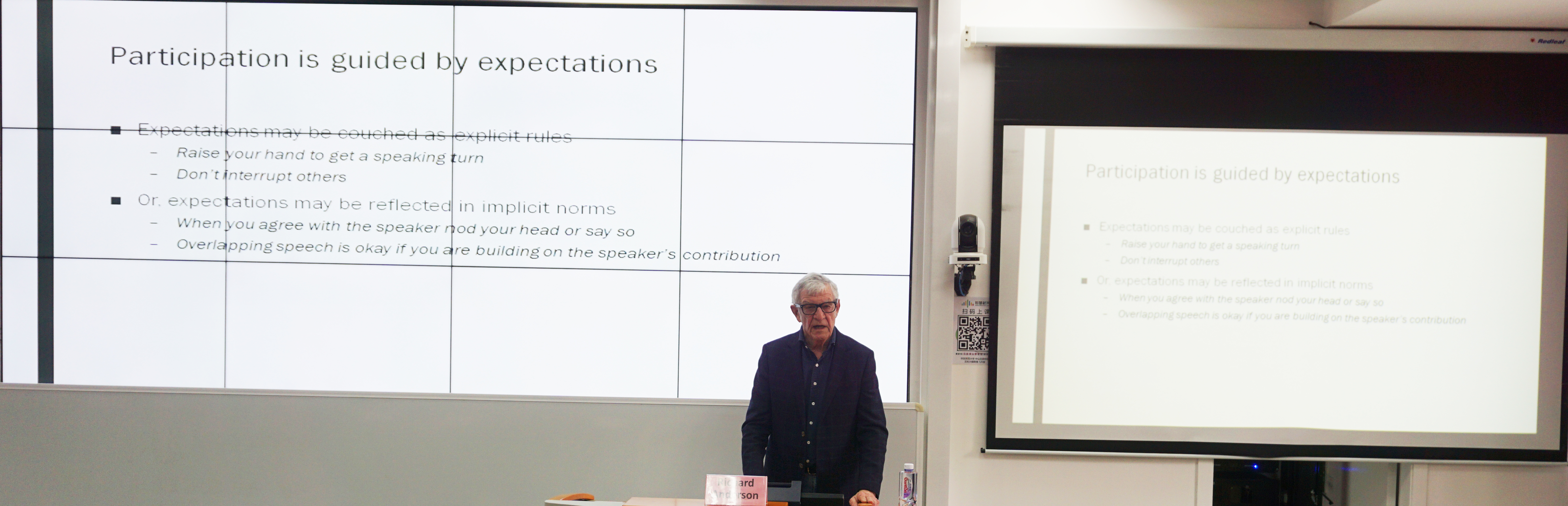
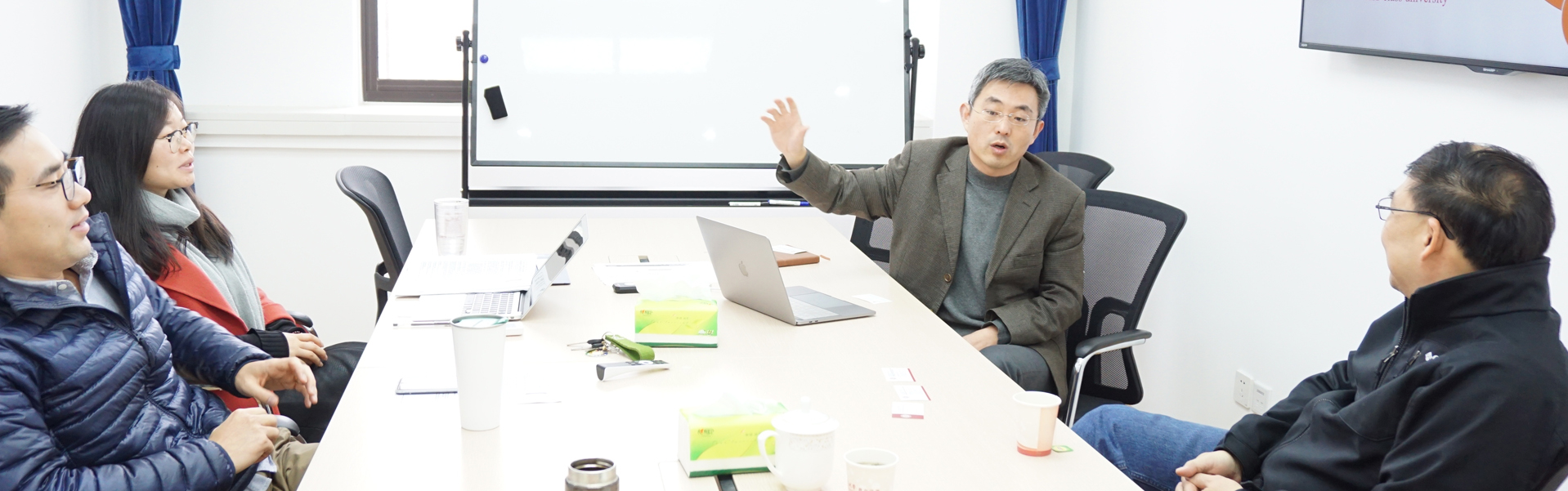
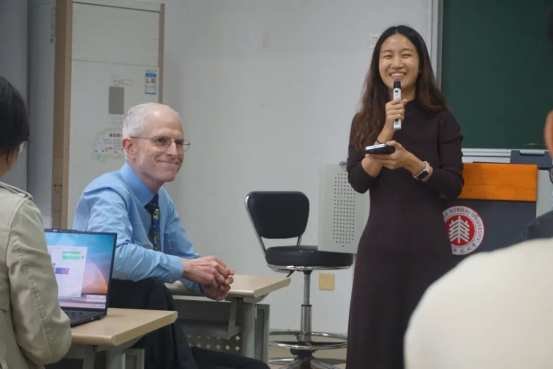
On the afternoon of November 12, 2025, Randy Bennett, a leading authority in the field of educational assessment in the United States and former Norman Frederiksen Chair at ETS Research, was invited to deliver an in-depth academic lecture titled "Key Trends in Educational Assessment: Changes and Constants in the Digital-Intelligent Age" to teachers and students at Room 120 of the Tin Ka Ping College of Education. The lecture was hosted by Teacher Zhao Xin.
How Is Educational Assessment Evolving?01 Year-Round AssessmentProfessor Bennett pointed out that educational assessment is currently in an exciting era of transformation. He first analyzed three cutting-edge trends: the first is "year-round assessment", which is quietly changing the traditional pattern of "one exam determining one’s fate". This model breaks assessment down into multiple small tests throughout the academic year. It not only enables closer integration of assessment and teaching, allowing teachers to obtain timely feedback and implement personalized instruction, but also aims to reduce students’ cumulative exam burden in terms of its core philosophy. 02 Remote TestingThe second trend is the rise and challenges of remote testing as a "new normal". Professor Bennett conducted a detailed analysis of various anti-cheating mechanisms behind it, including in-person proctoring, AI proctoring, and recorded review. At the same time, he frankly noted that the comparability of scores between remote and in-person exams remains an unresolved key issue in current research, leaving room for future exploration. 03 AI and Educational AssessmentThirdly, the application of generative artificial intelligence has brought tremendous changes to educational assessment. Professor Bennett vividly demonstrated AI’s powerful functions in test item development, answer analysis, curriculum alignment review, and even automated scoring, revealing the breadth and depth of AI application scenarios. He also specially reminded the audience of the situations in which AI can be used to support efficient learning, and those in which its use is not recommended—because outsourcing core intellectual work would hinder scholars’ own growth.
What Are the Cornerstones of Educational Assessment?Amidst the myriad of changes, Professor Bennett emphasized several important constants in educational assessment. He stated that regardless of technological evolution, the fundamental purpose of educational assessment has always been to address basic social issues: monitoring the effectiveness of education systems, identifying and narrowing gaps in educational opportunities, providing a basis for key decisions, and ultimately improving teaching and learning.Meanwhile, the basic elements of educational assessment have remained unchanged. Any assessment is inseparable from four core links: designing observation opportunities, linking evidence to inferences, effectively communicating results, and evaluating quality and impact. Underpinning all of this is society’s enduring expectations for assessment systems: validity, fairness, and reliability. These core social values are the unshakable cornerstones of assessment work.
Interaction and InsightsDuring the Q&A session, teachers and students in attendance engaged in in-depth exchanges with Professor Bennett on issues such as whether year-round assessment might exacerbate student anxiety, whether AI skills should become a new assessment dimension, and how to ensure the fairness of AI applications. The professor stressed that in an era of rapid technological iteration, it is even more important to think and act strategically, strike a balance between "change" and "constancy", and firmly uphold the foundational role of a solid knowledge base for understanding and applying AI—an argument that sparked reflection and recognition among the students.
This academic lecture built a high-level platform for teachers and students to engage in dialogue with the forefront of international educational assessment. With his profound academic accumulation and forward-looking perspective, Professor Randy Bennett systematically explained the three major trends of year-round assessment, remote testing, and generative AI, and conducted an in-depth analysis of the unchanging fundamental purposes, elements, and social values of educational assessment. Through this thought-provoking sharing, the participants gained a more holistic understanding of the dynamic evolution and core cornerstones of the educational assessment field. It not only provided a key theoretical framework and innovative perspective for related research, but also injected new impetus into thinking about the deep integration of technology and education, and promoting the development and improvement of assessment systems. |


| Contact us | |
|
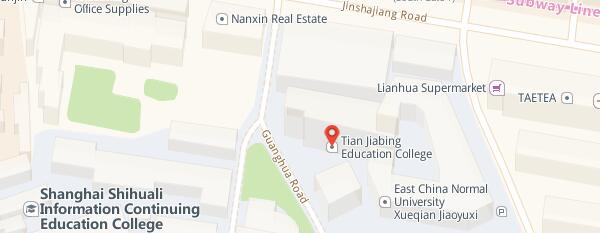
Department Of Educational Psychology Address : No. 3663, Zhongshan North Road, Shanghai Zip code : 200062 Tel : 86-21-6223078 E-mail : depecnu@163.com |
|
| Copyright 2018 East China Normal University Department Of Educational Psychology . All Rights Reserved | Technical support: Shanghai echao |