
|
Event Recap | Interdisciplinary Salon: From Awareness to Action: Mechanisms and Intervention Paths for Bystanders in School Bullying
Time:2025-10-30 Counts:90
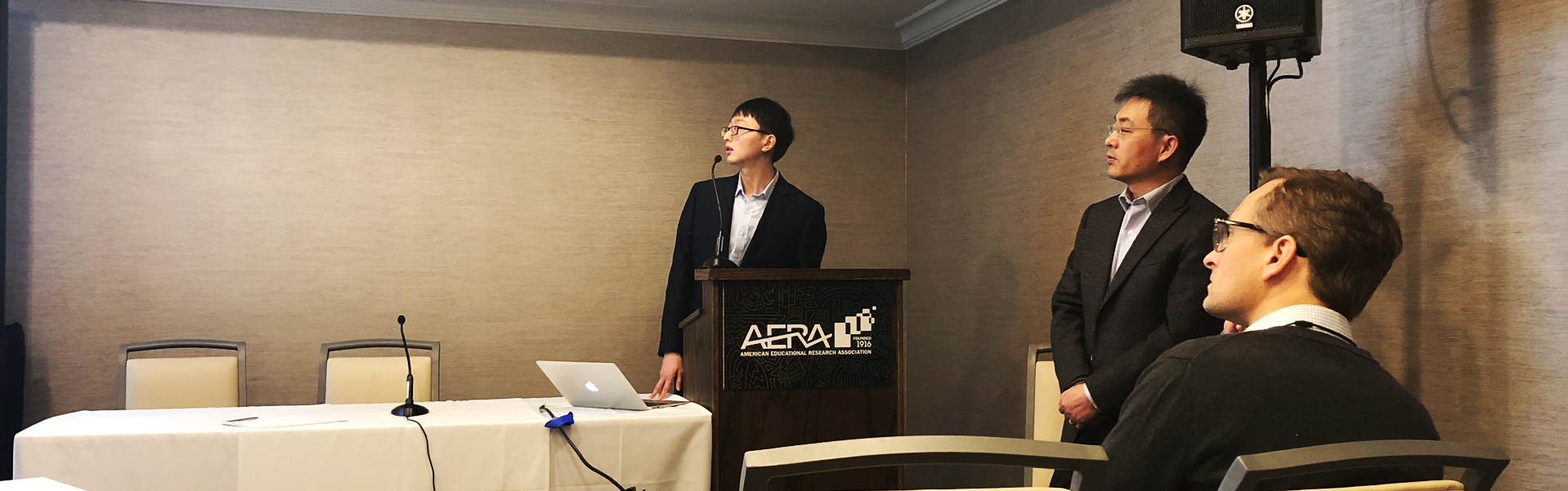
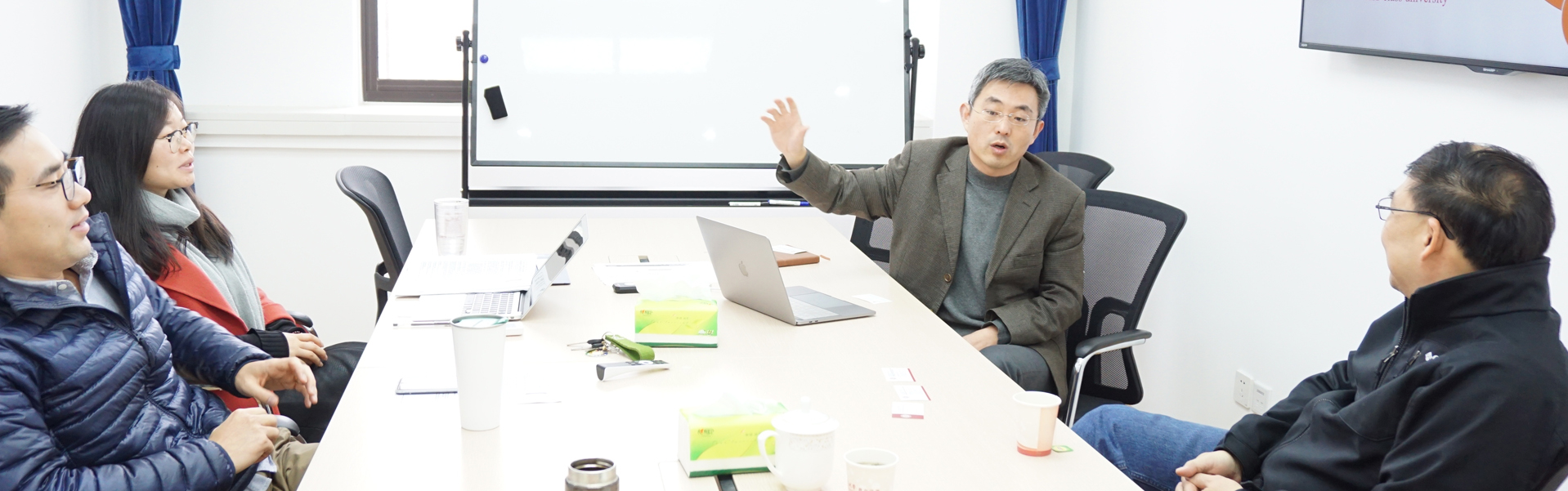
On the afternoon of October 17, 2025, the Department of Educational Psychology of East China Normal University successfully held an interdisciplinary salon themed "From Awareness to Action: Mechanisms and Intervention Paths for Bystanders in School Bullying" in Room 801 of the Tin Ka Ping College of Education.Hosted by Associate Professor Ren Huiguang, the salon saw active participation from teachers and students of the Department of Educational Psychology. The invited keynote speaker was Dr. Zhu Qianyu, Assistant Professor and PhD Supervisor in the Department of Applied Psychology at The Chinese University of Hong Kong, Shenzhen, and holder of a PhD in School Psychology from the University of Maryland, USA. Dr. Zhu has long focused on school bullying and adolescent mental health, with key research on the occurrence and development mechanisms of bystander intervention behaviors; as a school psychologist, she is responsible for guiding students' clinical training and excels in psychological assessment and intervention for children and adolescents.
Core Consensus: Re-recognizing School BullyingAgainst the backdrop of campus safety being incorporated into core social governance issues and growing nationwide attention to adolescent mental health, the intervention and prevention of bullying behaviors are no longer the "internal affairs" of individual campuses, but a public issue related to the healthy growth of a generation of adolescents.What exactly can be defined as bullying? How to effectively intervene in bullying? What forms should protection for victims take? ... In response to these questions, Dr. Zhu Qianyu and her team conducted in-depth research on the characteristics and processes of bullying, helping participants break through cognitive biases about school bullying. The research holds that bullying is by no means an incident between two individuals, but a group phenomenon with gender and age differences, and also entails intentionality, repetition, and power inequality; bullying behavior is a complex system influenced by multiple levels including peers, parents, teachers, and the environment. These findings not only reveal the essence and complexity of bullying behavior but also provide important insights for bullying intervention measures and educators.
Key Findings: An Analysis of Three Major Studies01 How Do Bystanders Influence Bullying?Focusing on the core and easily overlooked role of "bystanders", Dr. Zhu Qianyu shared three progressive studies, unraveling the puzzle of "how to promote bystanders from onlooking to intervention" layer by layer:Study 1 explored the temporal evolution and multi-level influences of bystander protective behaviors; Study 2 examined the impact of the consistency of teachers' and parents' attitudes toward bullying on students' protective behaviors; Study 3 was an RCT study on bullying intervention training for normal university students.Among them, the research data included a survey of over 2,000 primary and secondary school students in grades 4-8 across 9 schools. The results showed that there are significant age differences in bystanders' understanding of bullying behaviors and their intervention actions. Specifically, bystanders' cognitive understanding of bullying behaviors gradually improves with grade advancement, but their intervention in bullying behaviors peaks in the 6th grade and then gradually declines.
02 How Do Teachers and Parents Influence Bullying?In the complex system influencing bullying behaviors, besides the student group itself, teachers and parents are also important links. Dr. Zhu also shared the impacts of teacher-student relationships, as well as teachers' and parents' attitudes and behavioral responses toward bullying, and discussed how teachers and parents should respond to bullying behaviors.Researchers collected data on students' responses to bullying in different teacher-student relationship contexts. The results indicated that positive teacher-student relationships can facilitate the transformation of empathy and are more likely to promote bystander intervention; conversely, negative teacher-student relationships tend to lead to the neglect of bullying behaviors.The study also found that teachers and parents do not naturally side with bullying victims; they hold both proactive and avoidant attitudes toward bullying, with consistency and inconsistency between them. When families and schools have consistent and proactive attitudes toward bullying, it can promote the positive transformation of bystander behaviors.In addition, the study collected data on teachers' and parents' bullying attitudes from students' perspectives. Students' subjective reports showed that there may be inconsistencies between the display of family-school bullying attitudes and students' subjective perceptions, which may lead to hesitation and negative transformation in students' intervention behaviors.
03 How to Intervene in Bullying?Bullying intervention is a key research topic in bullying-related studies. Currently, academic research focuses on breaking through the limitations of traditional interventions and building a scientific, systematic, and long-term intervention system, with many research teams having conducted in-depth discussions on effective paths for bullying intervention.In this study, Dr. Zhu and her team first focused on the understanding of bullying intervention, arguing that bullying behavior intervention is a cognitive process. From detection to conception, and then to confidently implementing help, researchers found that the cognition of bullying behavior intervention is dynamically changing; students may instinctively avoid conflicts in the initial stage, but with in-depth cognition, they will gradually adjust their response modes to bullying behaviors.Since schools are the core venues for bullying intervention, the team also paid key attention to the training of normal university students who will engage in the education industry in the future. An RCT randomized controlled experiment conducted showed that normal university students who participated in the training had a significant improvement in their "self-efficacy in bullying intervention", were better able to accurately identify bullying, formulate intervention strategies, and enhanced effective intervention pathways for school bullying.
Interactive Q&A: Confronting Practical DifficultiesIn the second half of the salon, teachers and students at the venue launched a lively discussion around "practical bullying intervention". Students actively put forward their puzzles in practice, such as emergency handling of gray-area bullying (giving insulting nicknames to classmates), distinguishing between jokes and bullying, and preschool bullying intervention. Dr. Zhu provided corresponding answers and professional suggestions for typical questions, enabling students to gain a great deal.This academic salon provided a valuable opportunity for teachers and students of the Department of Educational Psychology to deeply explore the intervention paths of school bullying. With her solid academic research and rich practical experience, Dr. Zhu Qianyu presented a bullying intervention system with both theoretical depth and practical value to the participants from the perspectives of bystanders, family-school collaboration, and teacher training.
Through the sharing and exchange at the salon, teachers and students have gained a more systematic understanding of the complexity of school bullying and the key logic of intervention. This not only provides new ideas for subsequent research on school bullying intervention but also offers feasible references for the implementation of bullying intervention strategies in practical scenarios such as schools and families, effectively promoting the transformation of school bullying intervention from "cognition" to "action", and injecting professional strength into safeguarding adolescent mental health and building a safe campus environment. |


| Contact us | |
|
Department Of Educational Psychology Address : No. 3663, Zhongshan North Road, Shanghai Zip code : 200062 Tel : 86-21-6223078 E-mail : depecnu@163.com |
|
| Copyright 2018 East China Normal University Department Of Educational Psychology . All Rights Reserved | Technical support: Shanghai echao |